Placeholder quote A. This card exists to show the layout only. Replace this text with a real customer review before launch.
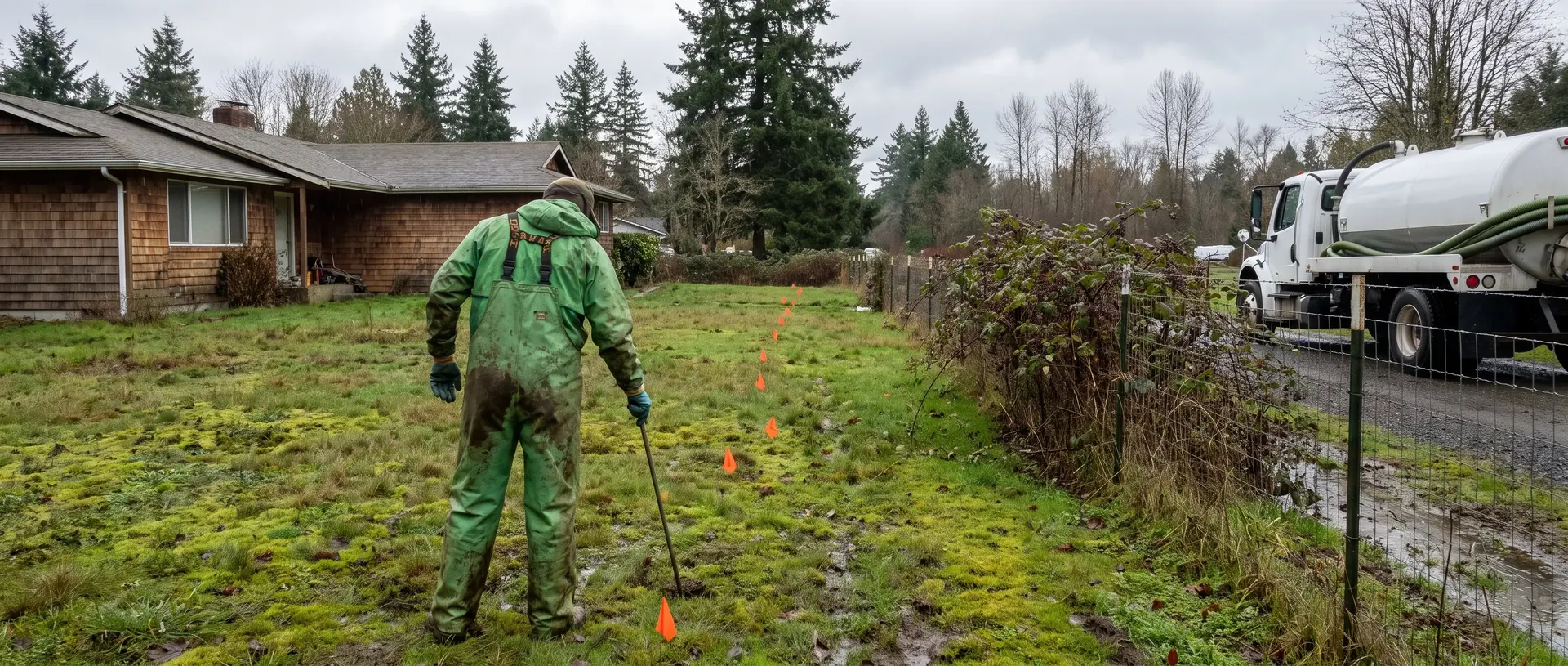
Septic Tank Locating and Records in Whatcom County
Just bought a rural property and nobody can tell you where the septic system is? That is normal here, and it is fixable in one visit.
- County records searched before we dig
- Probing and locating rather than guessing
- Lids brought to grade while we are there
- You get a marked plan for next time
01The job
On older rural properties, nobody knows where anything is
This comes up constantly. Somebody buys an acreage property, the previous owner did not know where the tank was either, there is no paperwork in the file, and the first time it matters is when something goes wrong or an inspection is due.
Two things are usually true at once. There is very often a record with the county that nobody has looked for, and the lids are very often eighteen inches under turf that has grown over them for thirty years.
So locating is two jobs. The paperwork job comes first, because a five minute records search can save an hour of probing. The physical job follows: probing the ground on the pattern the record suggests, or on the pattern the plumbing and the site dictate when there is no record at all.
Once we have found it, we mark it properly and, if it makes sense, fit risers so nobody has to do this again. That last part is what turns a frustrating visit into a permanent fix.
02Scope
What we handle
Locating a buried tank and lids
Probing to find the tank, the lids and the extent of the system on properties where nothing is visible at the surface.
Records retrieval
Searching for the county as-built record and any maintenance history for the property, and explaining what the drawing actually shows.
Mapping the system for the future
Marking positions, and where useful producing a simple measured sketch tied to fixed points on the property so it can be found again by anyone.
03Included
What is included
Records search first
We look for the as-built before we come out. If one exists, the visit is dramatically shorter and cheaper.
Systematic probing
Working from the house outward along the likely line of the outlet, on the pattern the site and the record suggest, rather than randomly.
Excavation to expose lids
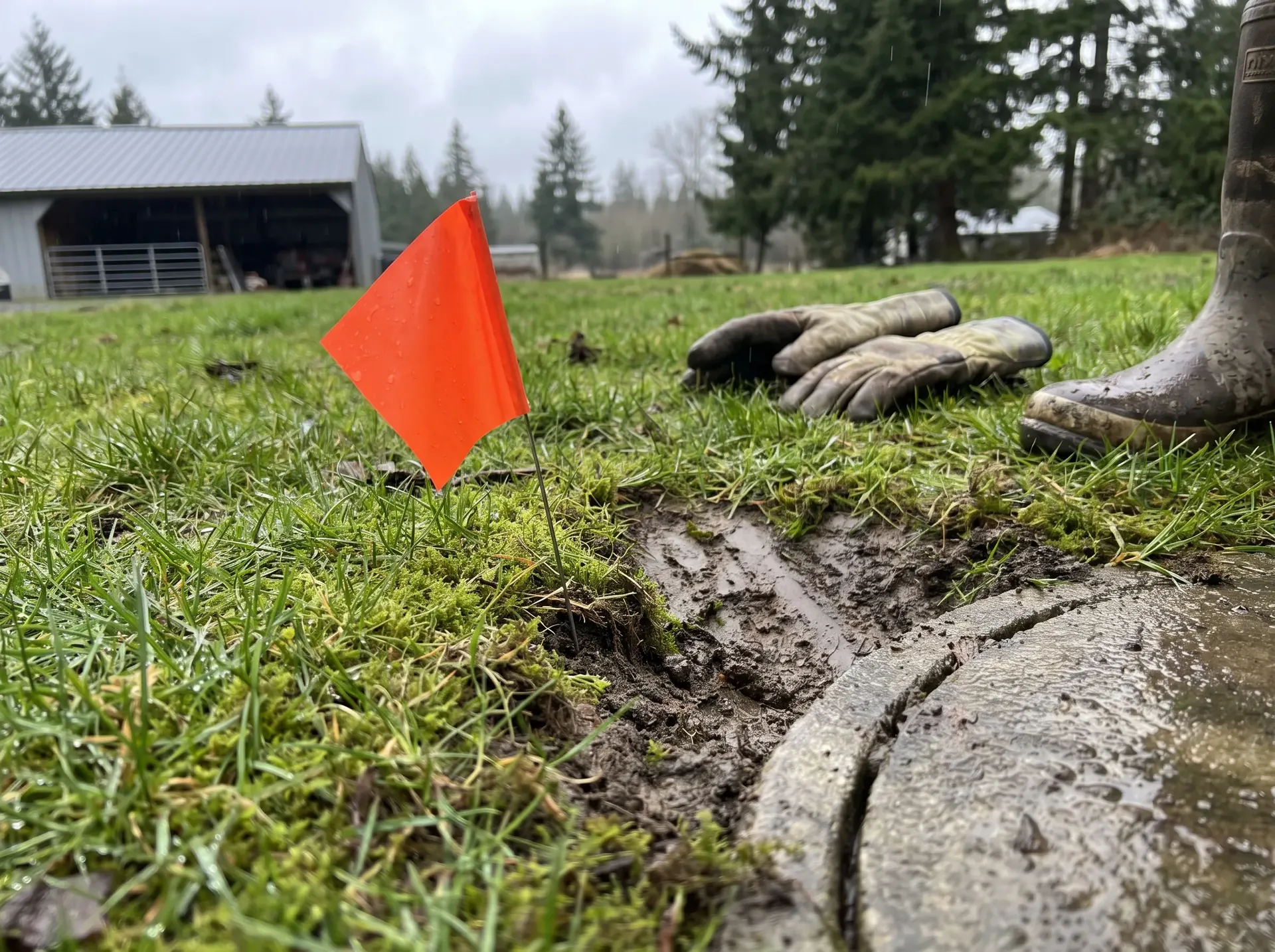
Digging down to expose the lids once located, and confirming what type and size of tank is there.
Marking and a record for you
Positions marked, and you get the information in a form you can keep. Risers can be fitted at the same visit if you want the lids at grade permanently.
04Job sequence
How a locate runs
What you already know
Any paperwork from the sale, anything the previous owner said, and where the plumbing leaves the house. Small clues save real time.
Records search
We check for a county as-built and maintenance history for the parcel.
Site assessment
Where the outlet plumbing exits, the fall of the land, where the well and any buildings are, and any surface clues such as greener grass or a slight depression.
Probing
Systematic probing along the likely line. On a property with no record and mature landscaping this is the part that takes time.
Expose and confirm
Digging down to the lids, confirming tank type and size, and checking condition while it is open.
Mark it for good
Positions marked and recorded, with risers fitted if you want to make future access straightforward.
05Why us
Why book a locate with us
We search the records first. It sounds obvious and it frequently does not happen, because probing is billable and searching is not. A property with an as-built on file can turn a two hour job into a thirty minute one, and we would rather that than the reverse.
We probe systematically. Random probing on a large lot is how a locate becomes an all day job. Working outward from the outlet along the fall of the land, informed by whatever the record shows, finds most systems quickly.
We offer risers at the same visit. If we have just spent an hour finding your lids and dug them out, fitting risers while the hole is open is by far the cheapest time to do it, and it means nobody ever repeats this.
And we give you the information to keep. A marked sketch tied to fixed points, so the next pump out, the next inspection and the next owner all start from a known position.
Dispatch
Bought a place and nobody knows where the tank is?
Book a locate. Doing it now, calmly, is much better than doing it in February with the drains backing up.
05Reviews
Placeholder review layout
Placeholder block. No customer reviews exist yet, so nothing here is real content and no rating, score or review schema is published. Replace with genuine reviews before launch or remove this section.
Placeholder quote B. This card exists to show the layout only. Replace this text with a real customer review before launch.
Placeholder quote C. This card exists to show the layout only. Replace this text with a real customer review before launch.
06FAQ
Tank locating questions
How do I find my septic tank?
Start with the county record for your parcel, then look at where the main drain leaves the house and follow that line outward. Surface clues include a slight depression, grass that greens up differently, or a patch that dries faster. Our records guide covers the paperwork side in detail.
Are there records of my septic system?
Frequently yes, and most homeowners have never looked. Whatcom County holds onsite sewage records for many properties, including as-built drawings showing tank and drain field positions. Older or unpermitted systems may have nothing on file.
What if there is no record of my septic system?
It happens, particularly on older rural properties and on systems installed before permitting was consistent. It does not mean the system is illegal, it means locating has to be done physically. It does become a complication at sale, which is a reason to sort it out before you need to.
How deep are septic tank lids buried?
Commonly anywhere from just under the turf to a couple of feet down, depending on how the ground has been landscaped since. Thirty years of lawn growth and topdressing accounts for a lot of it.
Can you drive over a septic tank?
Standard residential tanks and lids are not built for vehicle loading, and neither is the drain field. Driving or parking over either risks cracking lids and crushing pipe.
Should I install risers while you are here?
If we have already dug the lids out, yes, this is the cheapest moment it will ever be. Risers bring the lids to ground level so every future pump out and inspection starts without a shovel.
07Coverage
Where we locate
We cover Bellingham, Lynden, Ferndale, Blaine, Birch Bay, Everson, Nooksack, Sumas, Deming, Custer, Sudden Valley and Point Roberts. Most of our locating work is on older rural acreage where records were never passed on.
View service areas- Bellingham
- Lynden
- Ferndale
- Blaine
- Birch Bay
- Everson
- Nooksack
- Sumas
- Deming
- Custer
- Sudden Valley
- Point Roberts
09Contact
Book a locate
Tell us the property and anything you already know, including anything that came up in the sale paperwork.
Call(360) 555-0147Mon to Fri, 7am to 5pm, with emergency service outside those hours.
- Same day emergency response
- The tank gets inspected while the lid is off
- Written reports the county and escrow accept
- No call out fee on a booked job
Request logged
Thanks. We will give you a time and a price.
If it is an emergency, call rather than waiting for a reply.
(360) 555-0147