Placeholder quote A. This card exists to show the layout only. Replace this text with a real customer review before launch.
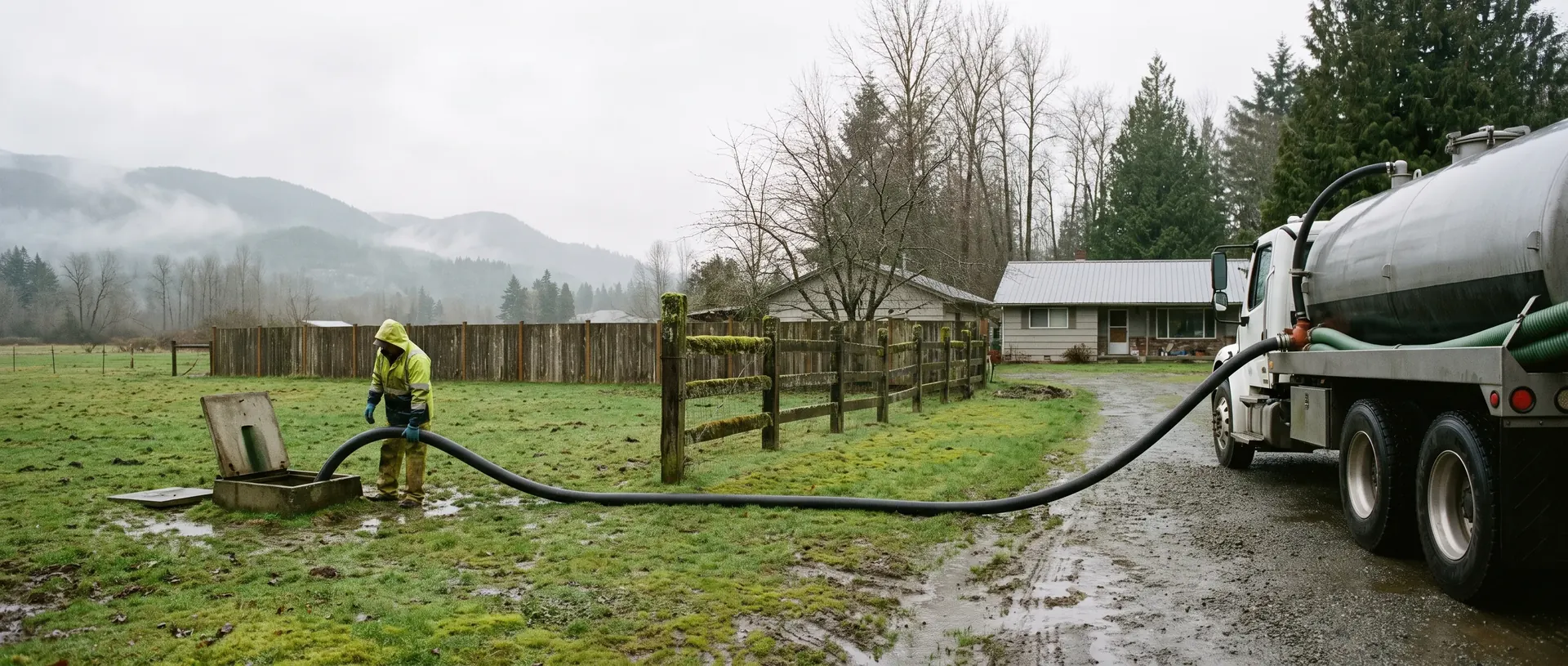
Septic Tank Pumping in Whatcom County
The routine job that prevents the expensive one. Lid off, tank checked, levels measured, and you get told what is in there.
- Tank inspected while the lid is off
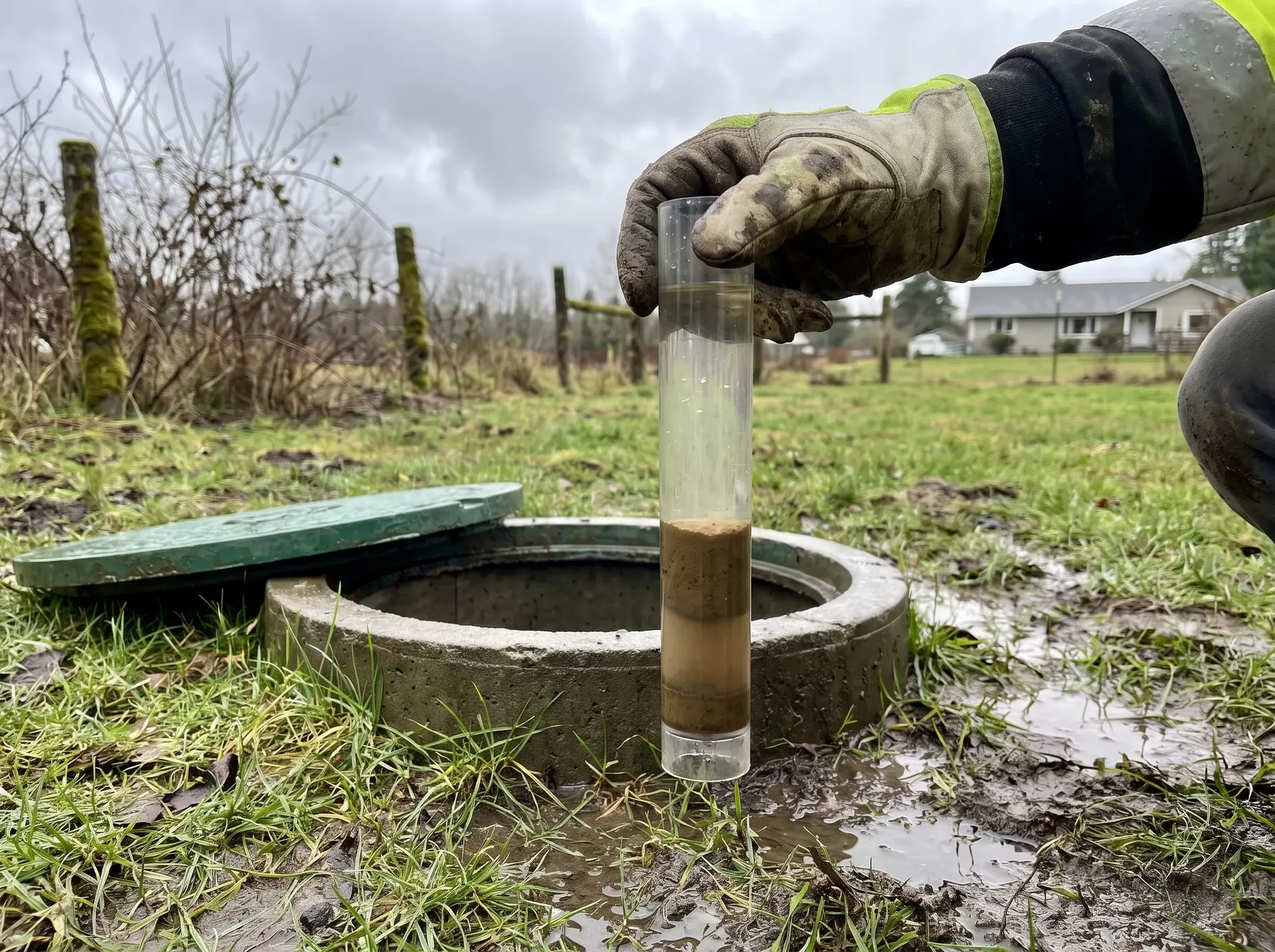
- Sludge and scum levels measured
- Buried lids located and dug at no extra charge
- Written record of what we found
01The job
Pumping is the cheapest maintenance you will ever do on this system
A septic tank separates solids from liquid. The liquid goes out to the drain field, the solids stay behind, and over time the solid layers build up until they start carrying over.
That carry over is the whole problem. Once solids reach the drain field they clog the soil, and clogged soil does not recover. You go from a several hundred dollar pump out to a five figure drain field replacement, and the transition happens quietly over a couple of years with no symptoms until the field is already gone.
Pumping on a sensible interval prevents that. It is not complicated and it is not expensive, and the fact that it is easy to forget is exactly why so many systems in this county fail early.
In Whatcom County there is a second reason to stay on top of it. Our winter water table is high, and a drain field that is already struggling with groundwater has no margin left for solids carry over. Systems here have less tolerance for a missed pump out than systems in drier ground.
02Scope
What we handle
Routine pumping
The scheduled pump out on a healthy system. Quick, straightforward, and the visit where we tell you whether anything is starting to go wrong.
Overdue and neglected tanks
Tanks that have not been touched in a decade or more, often with hardened solids and a badly fouled outlet filter. These take longer and sometimes need the tank refilled and re-pumped, and we will tell you before we start if that is likely.
Pumping as part of an inspection or sale
A property transfer inspection almost always requires the tank pumped so the interior can actually be assessed. We do both in one visit rather than making you book twice.
03Included
What is included
Locating and opening the tank
If the lids are buried we find them and dig them out. On older rural properties this is frequently half the job, and we do not treat it as an extra.
Full pump out
Both compartments on a two chamber tank, not just the inlet side. Pumping only the first chamber is a common shortcut and it leaves half the problem in the ground.
Interior inspection
Baffles, tees, inlet and outlet condition, sludge and scum depths, and the effluent filter cleaned if the system has one. This is the part that turns a pump out into useful information.
Written record and next interval
What we found and what we did, plus a realistic interval for your specific tank and household rather than a generic number.
04Job sequence
How a pump out runs
Booking
We ask where the property is, roughly when it was last pumped, and whether you know where the lids are. That decides how long to allow.
Locating
If the lids are buried or nobody has records, we probe and locate before anything else happens.
Open and assess
Lids off, condition of the tank and baffles checked, sludge and scum measured before we start pumping.
Pump
Both chambers emptied, tank walls and baffles checked once the level drops and there is something to see.
Filter and reassembly
Effluent filter cleaned if fitted, lids reseated, and the ground made good.
What we found
You get told what condition the system is in, anything that needs watching, and when to book the next one.
05Why us
Why book with us
We open the tank and look. That sounds like a low bar and it is not universal. A pump out where the truck arrives, the hose goes in and the truck leaves is a missed opportunity, because the only time anyone can see the inside of a septic tank is when it is empty and the lid is off.
We also pump both chambers. Emptying only the first compartment is faster, cheaper for us, and leaves solids sitting in the second one. If you have had a suspiciously quick pump out in the past, this is often why.
We dig for buried lids as part of the job rather than as a surprise line on the invoice. On rural properties around here, lids buried under a decade of turf are normal rather than exceptional.
And we give you an honest interval. If you genuinely do not need us back for four years we will say four years. Overselling frequency on a service like this is short sighted and easy to spot.
Dispatch
Due, or not sure when it was last done?
If nobody can tell you when it was last pumped, it is due. Book it before winter rather than after.
05Reviews
Placeholder review layout
Placeholder block. No customer reviews exist yet, so nothing here is real content and no rating, score or review schema is published. Replace with genuine reviews before launch or remove this section.
Placeholder quote B. This card exists to show the layout only. Replace this text with a real customer review before launch.
Placeholder quote C. This card exists to show the layout only. Replace this text with a real customer review before launch.
06FAQ
Septic pumping questions
How often does a 1000 gallon septic tank need to be pumped out?
Typically every two to five years for a normal household, and the range is that wide because household size matters more than tank size. Four people fill a 1000 gallon tank roughly twice as fast as two people do. We measure your levels and give you a real number.
Can a septic tank go 20 years without being pumped?
Physically yes, practically no. Long before twenty years the solids carry over into the drain field and clog it. Skipping pumping does not save money, it converts a small recurring cost into a large one off cost.
What is the average cost of pumping a septic tank in Washington state?
It depends on tank size, access, how overdue it is and whether lids need digging out. Our cost guide sets out what actually moves the number rather than quoting a single figure that would be wrong for half the county.
How much to have a 1000 gallon septic tank pumped?
A standard 1000 gallon residential tank with accessible lids is the baseline job. Buried lids, a badly overdue tank, difficult access down a long soft drive, or a tank that needs refilling and re-pumping all move it up.
What are signs that your septic tank is full?
Slow drains across the whole house, gurgling, smells near the tank or field, and soggy or unusually green grass over the drain field. Sewage backing up indoors or surfacing outside means you are well past full.
Does a septic tank need to be serviced?
Yes, and pumping is the core of it. The tank itself has no moving parts on a conventional gravity system, but the solids still accumulate and the effluent filter still needs cleaning. Pressurised systems have pumps, floats and alarms that need checking as well.
How often should you get a septic tank serviced?
Pumping on your measured interval, and an effluent filter clean roughly annually if your system has one. If your system is on a county operation and maintenance requirement, the required frequency is set by that rather than by preference.
07Coverage
Where we pump
We cover Bellingham, Lynden, Ferndale, Blaine, Birch Bay, Everson, Nooksack, Sumas, Deming, Custer, Sudden Valley and Point Roberts, plus the rural county in between.
View service areas- Bellingham
- Lynden
- Ferndale
- Blaine
- Birch Bay
- Everson
- Nooksack
- Sumas
- Deming
- Custer
- Sudden Valley
- Point Roberts
09Contact
Book a pump out
Tell us where you are and roughly when it was last done. If you do not know, say so, that is normal.
Call(360) 555-0147Mon to Fri, 7am to 5pm, with emergency service outside those hours.
- Same day emergency response
- The tank gets inspected while the lid is off
- Written reports the county and escrow accept
- No call out fee on a booked job
Request logged
Thanks. We will give you a time and a price.
If it is an emergency, call rather than waiting for a reply.
(360) 555-0147