Placeholder quote A. This card exists to show the layout only. Replace this text with a real customer review before launch.
Septic Service in Lynden, WA
- Same day emergency response
- Winter groundwater diagnosed, not guessed
- Larger acreage and farm systems
- Written reports for escrow and the county
01The ground
Lynden systems are fighting the water table, not usually the tank
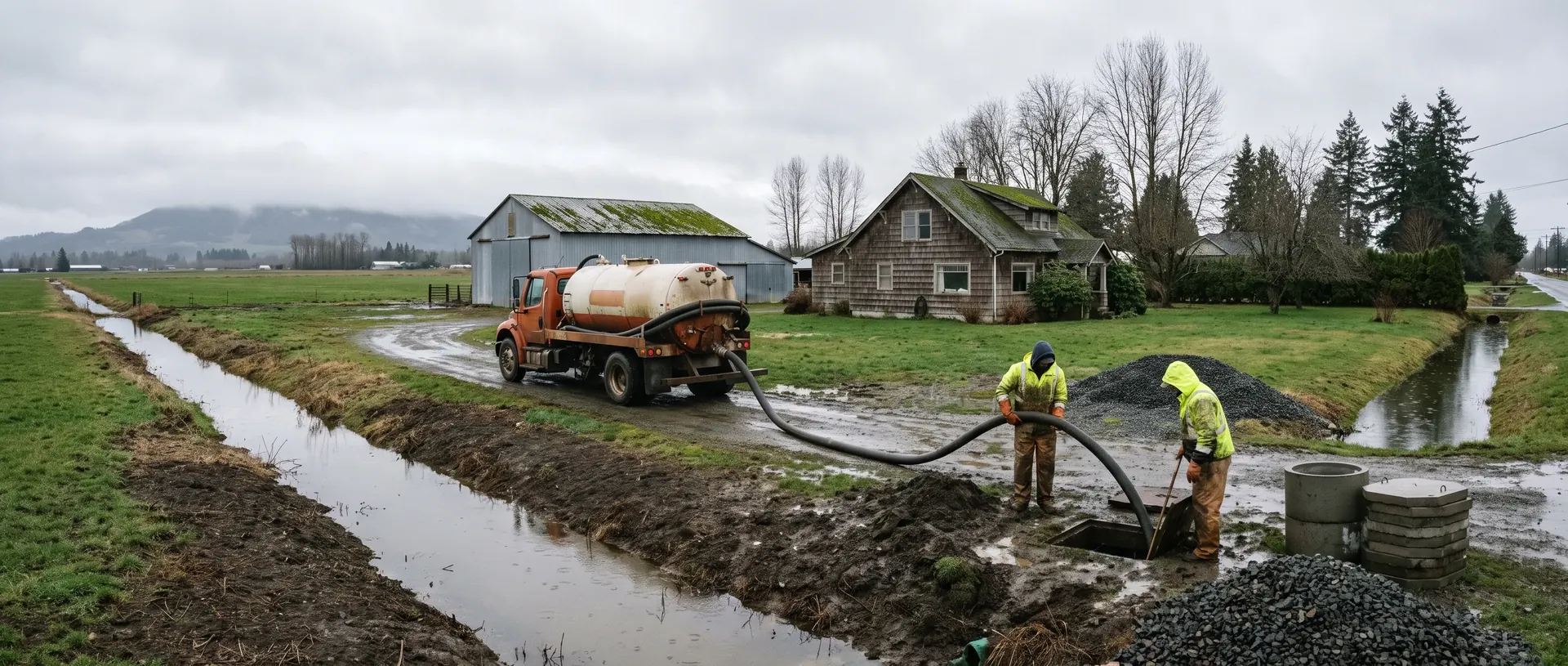
Lynden and the farmland around it sit on some of the flattest, wettest ground in the county. The Nooksack is close, the land barely falls, and from November through March the water table comes up to within a couple of feet of the surface across large areas.
That single fact explains most of the septic work we do here.
A drain field disposes of effluent by letting it soak into unsaturated soil. When the groundwater has risen to meet the bottom of the trenches, there is nowhere for it to go. The field backs up, the ground gets soggy, and the homeowner concludes the system has failed.
Frequently it has not. It is a system with no reserve capacity meeting a season it cannot cope with. Come July the same field works perfectly.
The distinction matters enormously because the fix is different and the price is different. A genuinely clogged field needs replacing. A field being drowned by groundwater sometimes needs drainage work, a rerouted downspout, or simply a household water discipline through the wet months. Those cost a fraction of a replacement.
We ask when the symptoms started before we ask anything else, and around Lynden the answer is usually "when the rain came".
02In this area
What we do in Lynden
Septic tank pumping on acreage properties and farms, including the larger tanks that come with them.
Drain field assessment, which is the core of our Lynden work, separating groundwater saturation from genuine failure.
Septic inspections for property transfers on farmland and rural acreage.
Repairs including pumps and alarms, since pressurised and mound systems are common on this ground precisely because gravity fields struggle here.
Design and installation for replacements, where an alternative system type is often the only viable answer.
02Service list
What we do
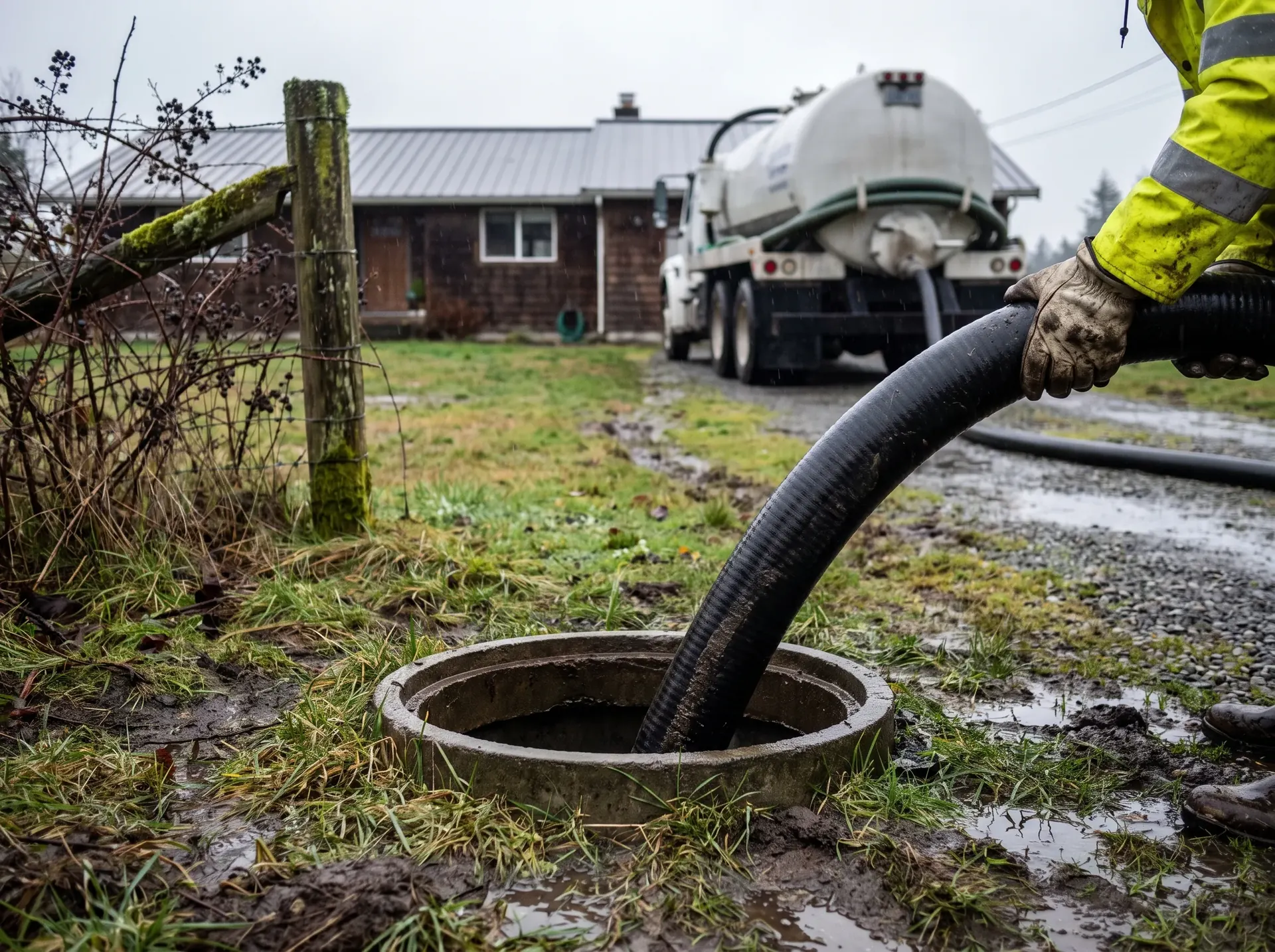 Septic Tank PumpingRoutine and overdue pumping, with the tank inspected while the lid is off.
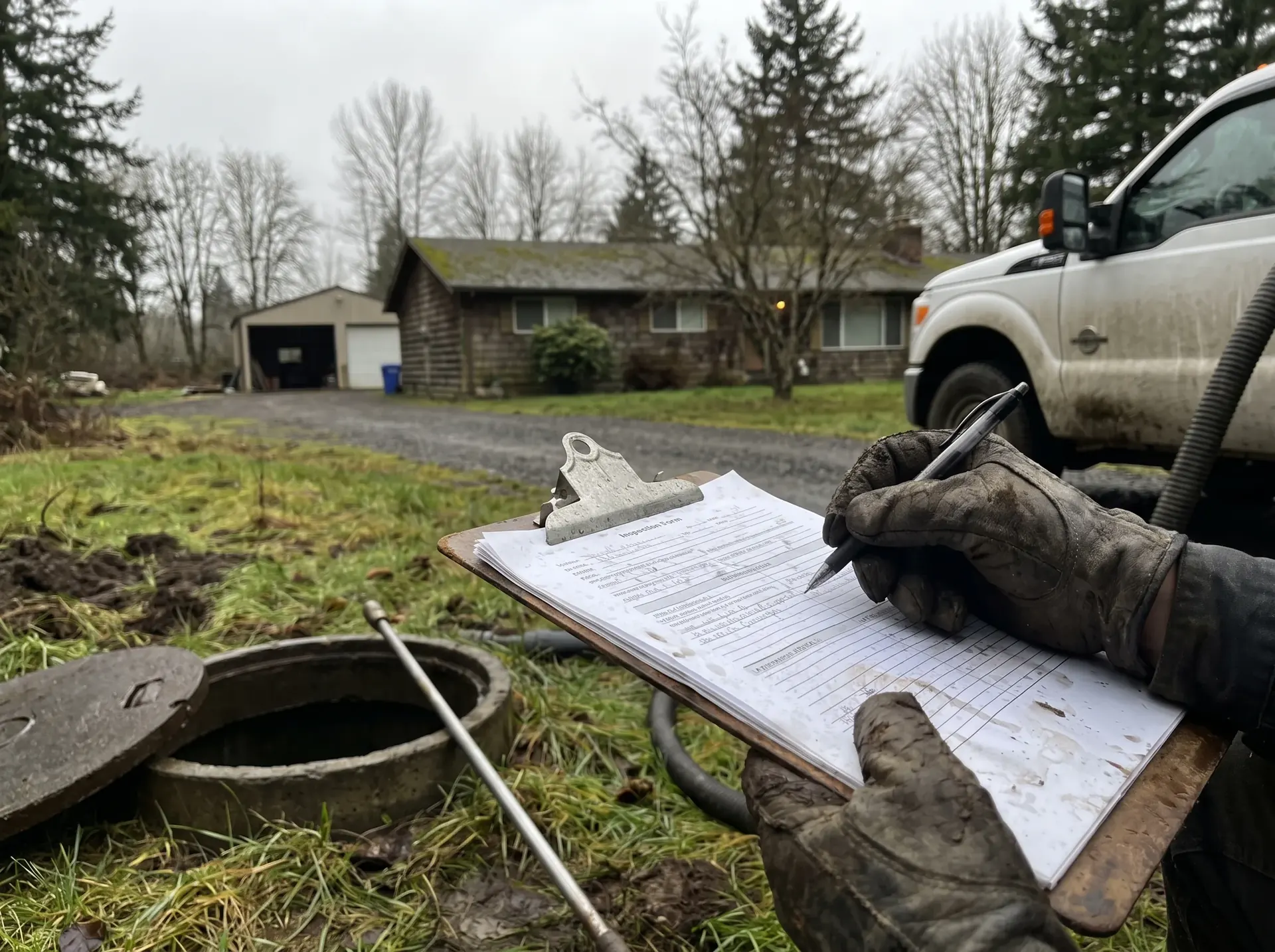 Septic InspectionsProperty transfer and routine inspections, with the written report you actually need.
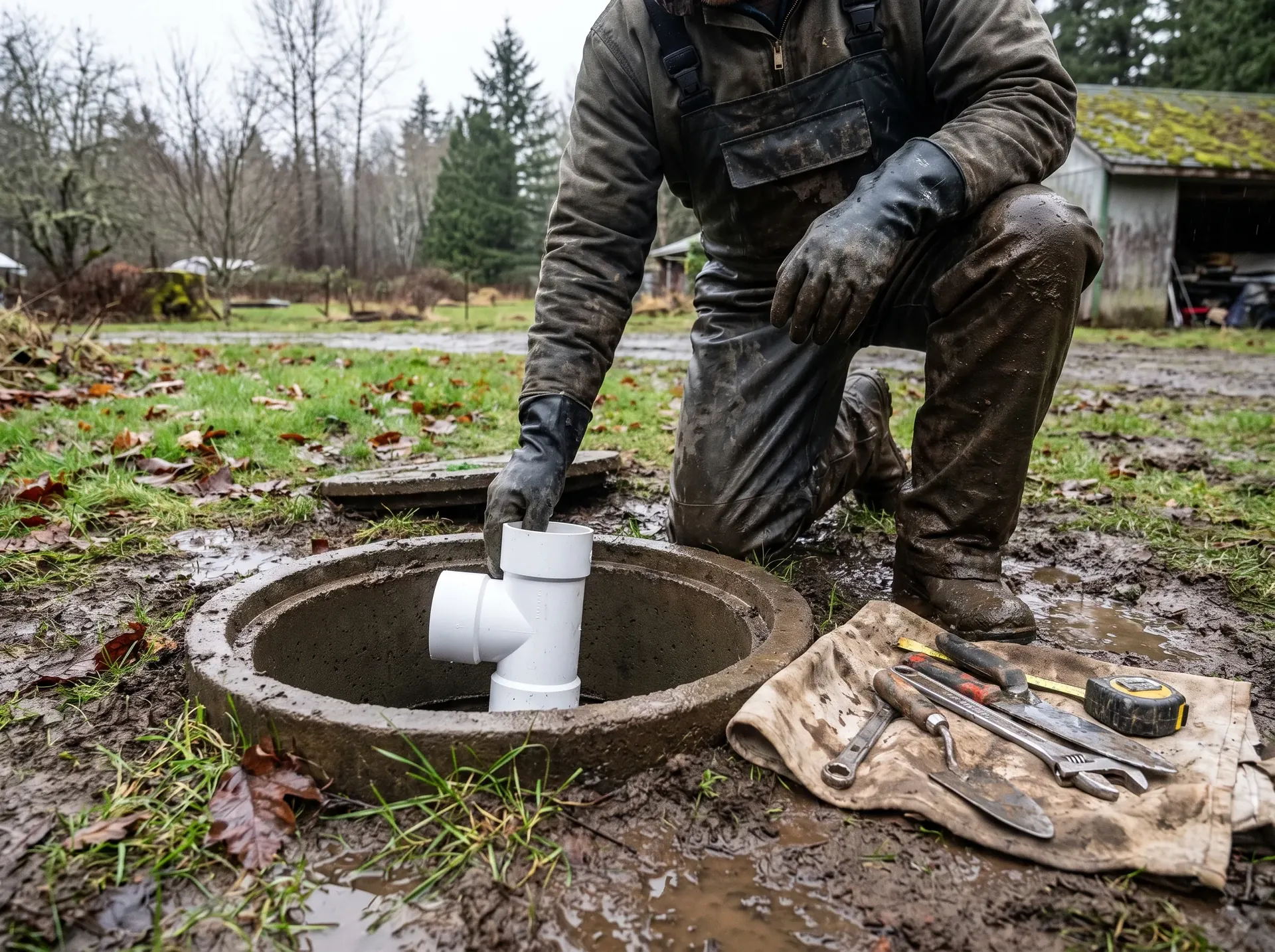 Septic System RepairBaffles, lids, risers, pumps, alarms and blocked lines, diagnosed before they are quoted.
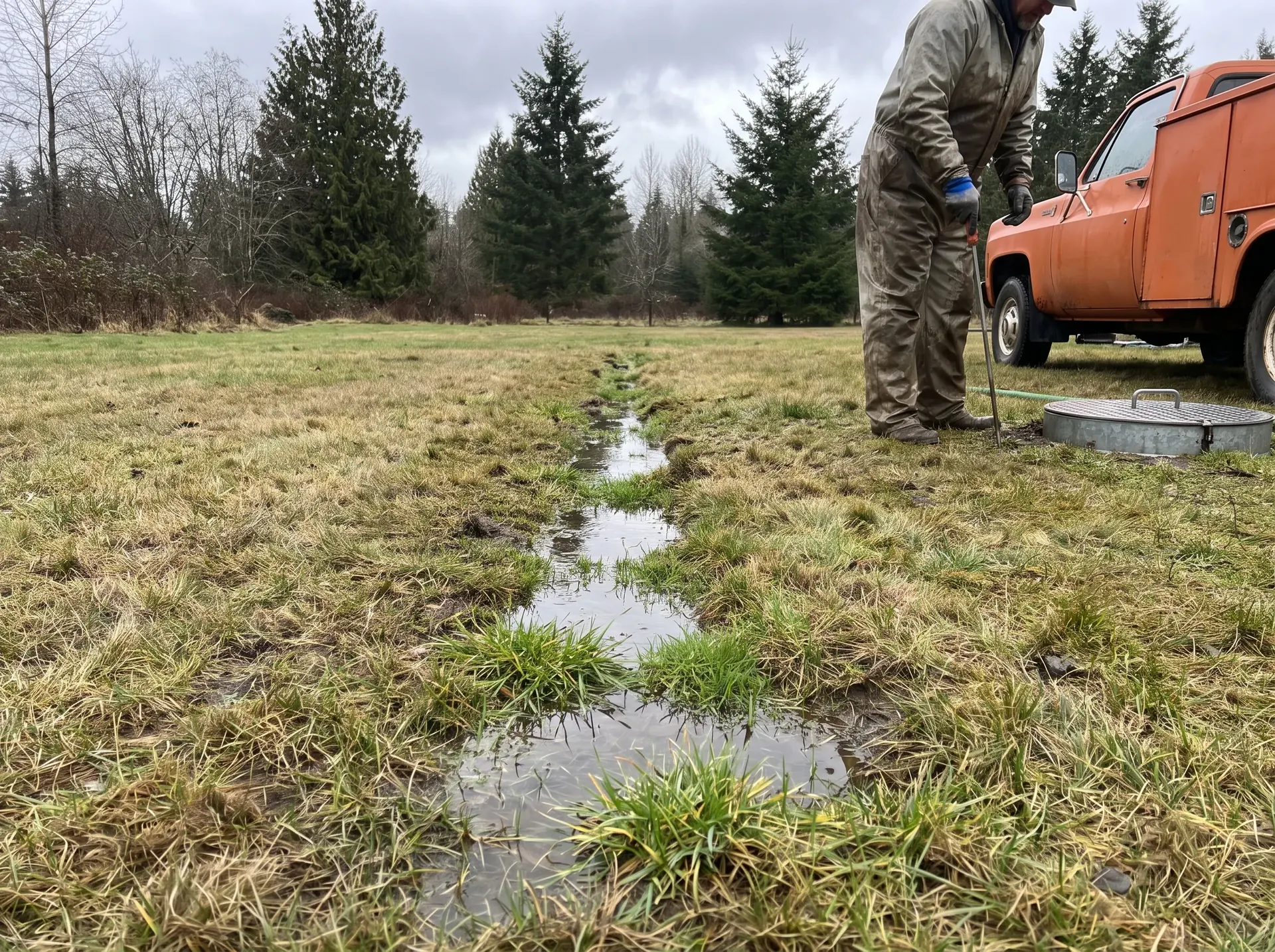 Drain Field Repair and ReplacementAssessment of whether a saturated field can be recovered or genuinely needs replacing.
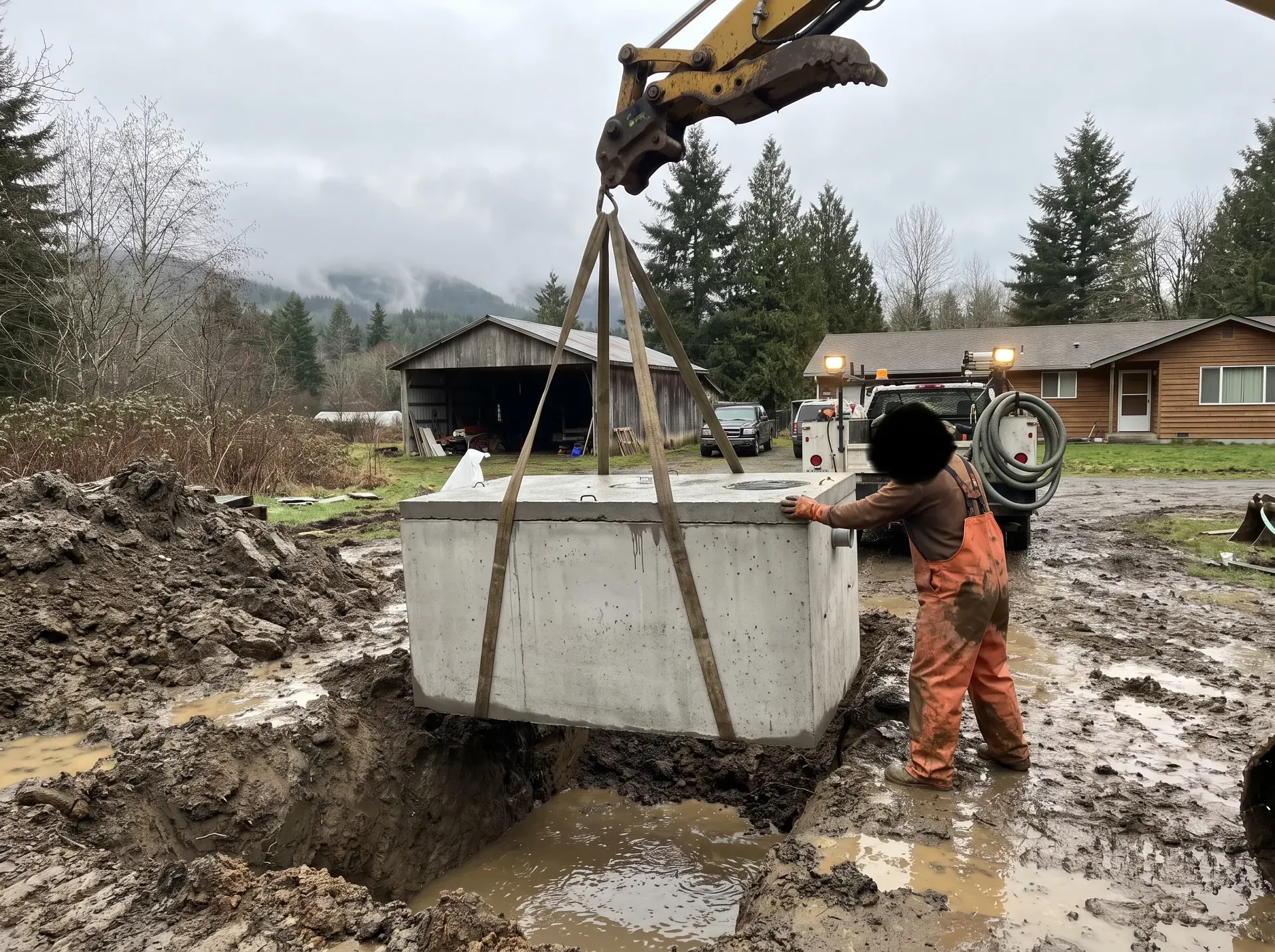 Septic System InstallationNew systems for new builds, from site evaluation and design through to final inspection.
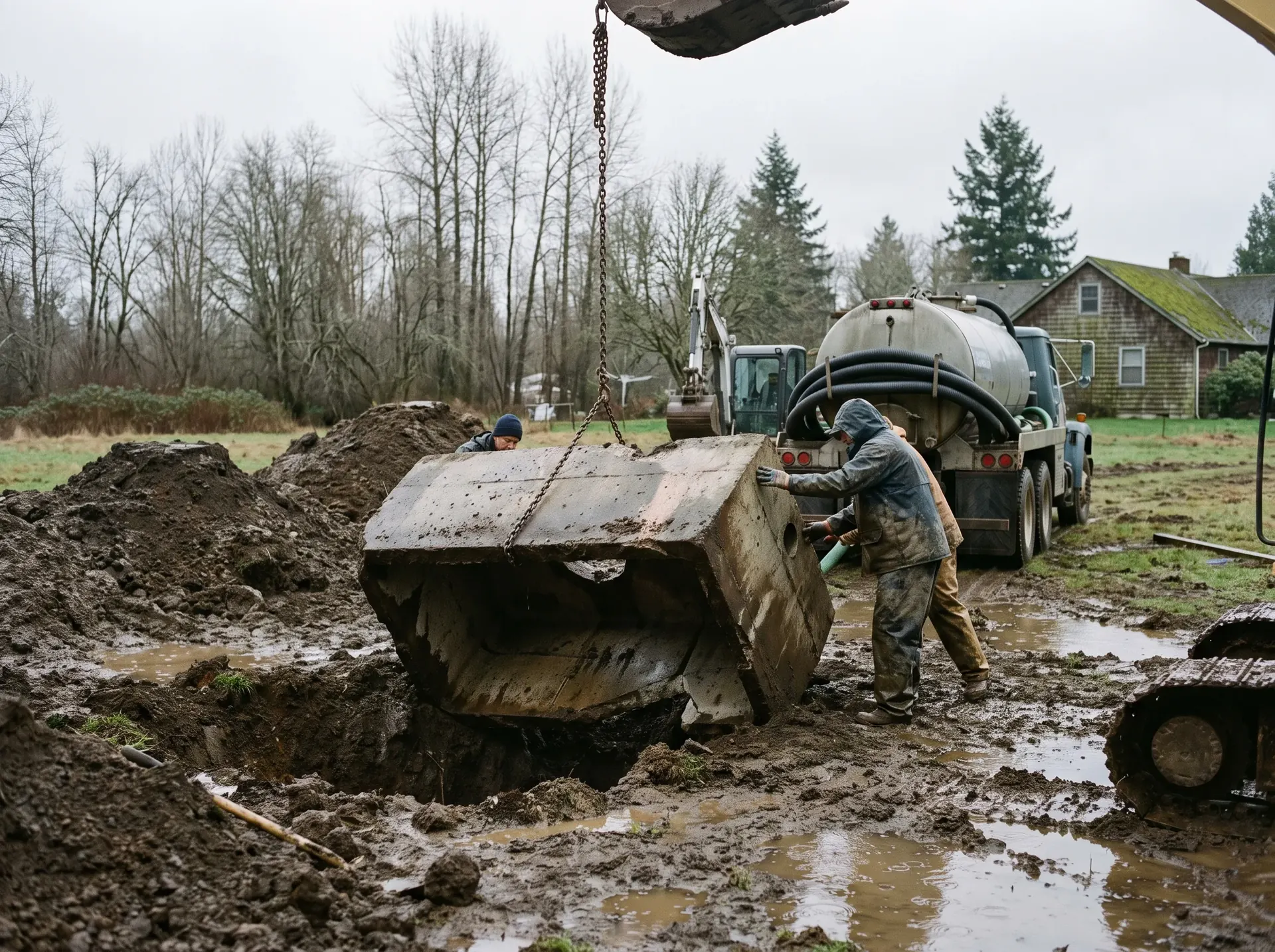 Septic System ReplacementFull replacement when a system has reached the end, including decommissioning the old tank.
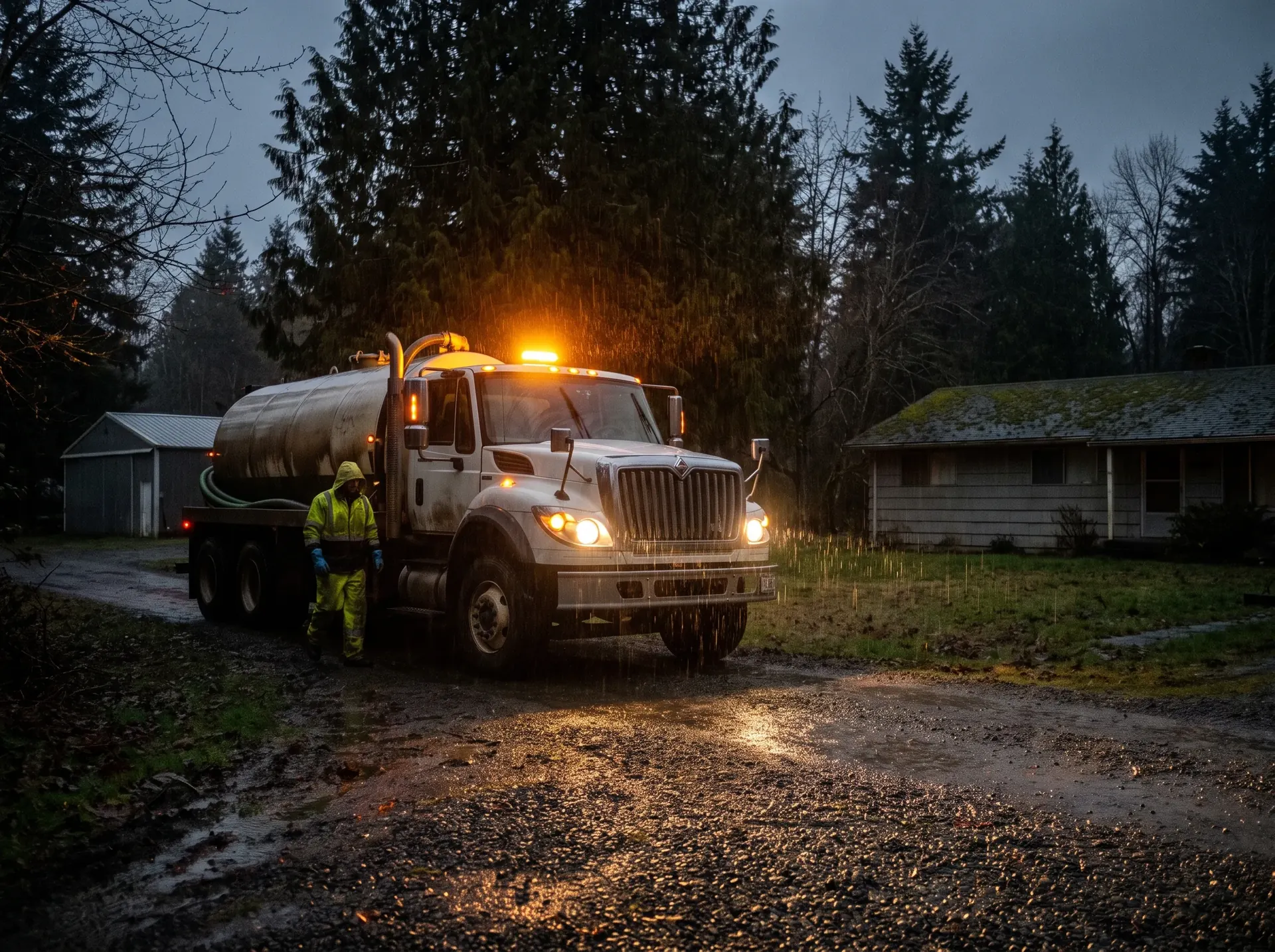 Emergency Septic ServiceBacking up, alarm sounding, or sewage surfacing. Same day response across the county.
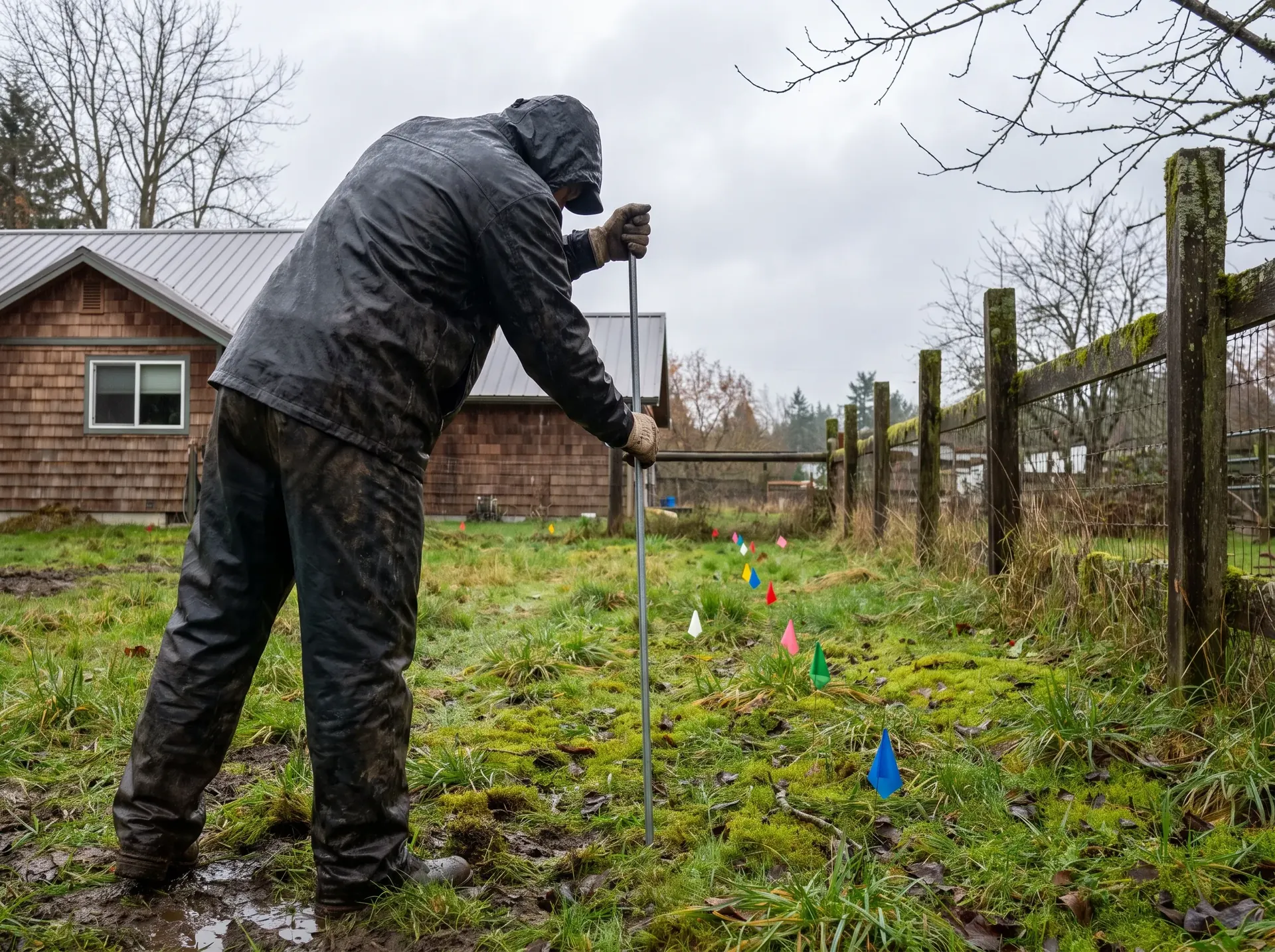 Septic Tank Locating and RecordsFinding a buried tank when nobody knows where it is, and tracking down the as-built.
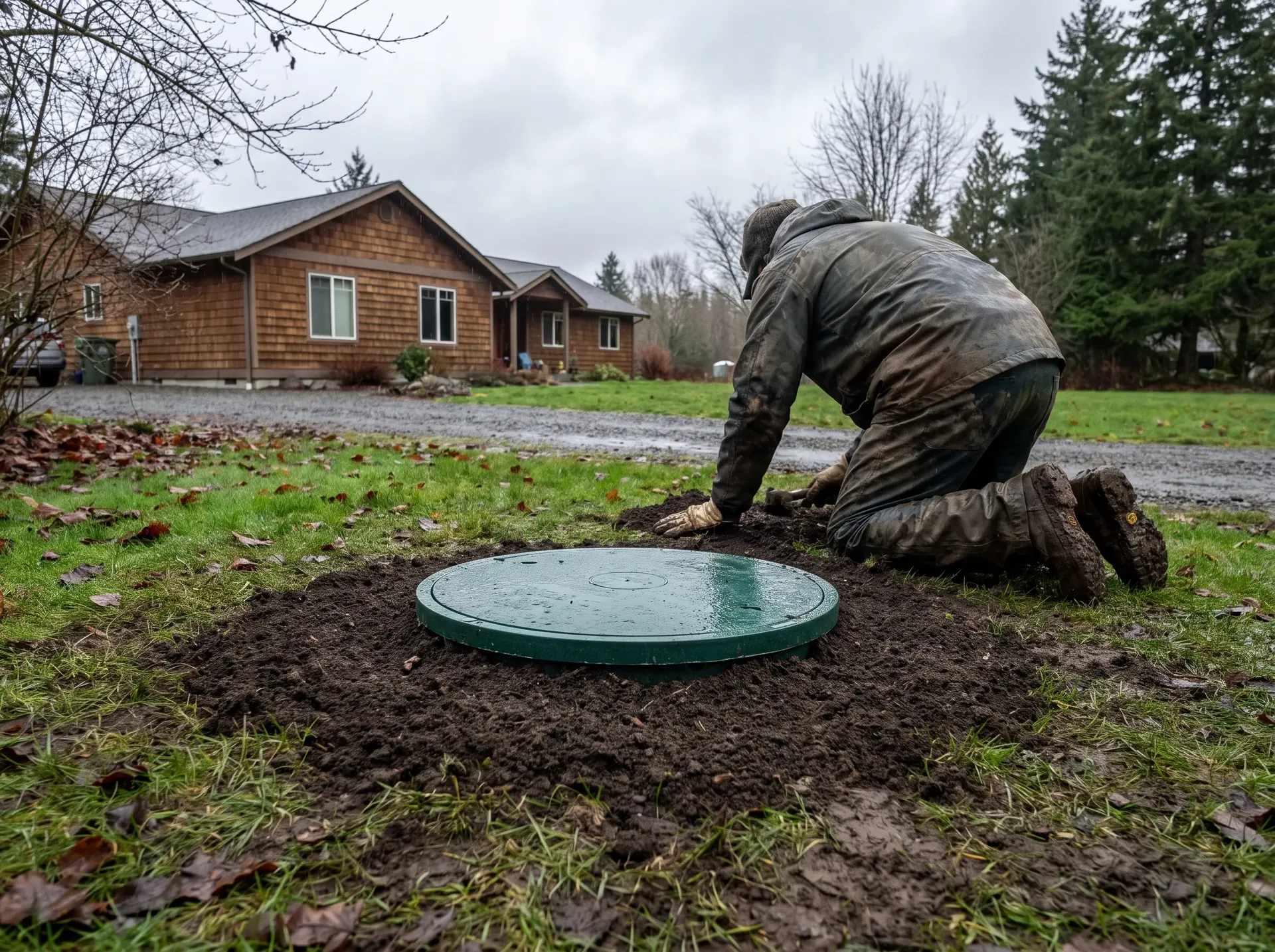 Riser and Lid InstallationBringing buried lids to grade so the next visit does not start with an hour of digging.
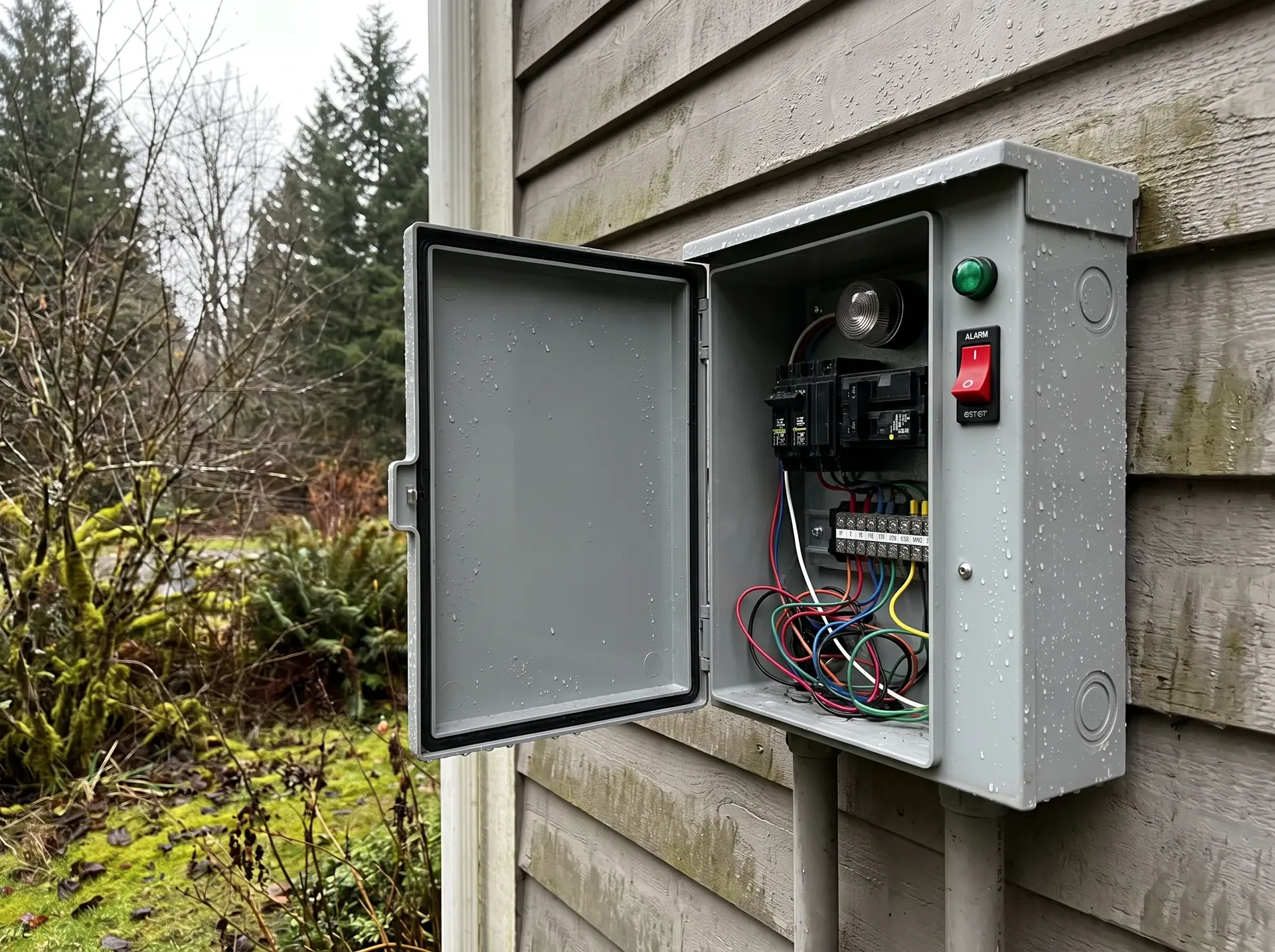 Pump and Alarm ReplacementEffluent and grinder pumps, float switches and alarm panels on pressurised systems.
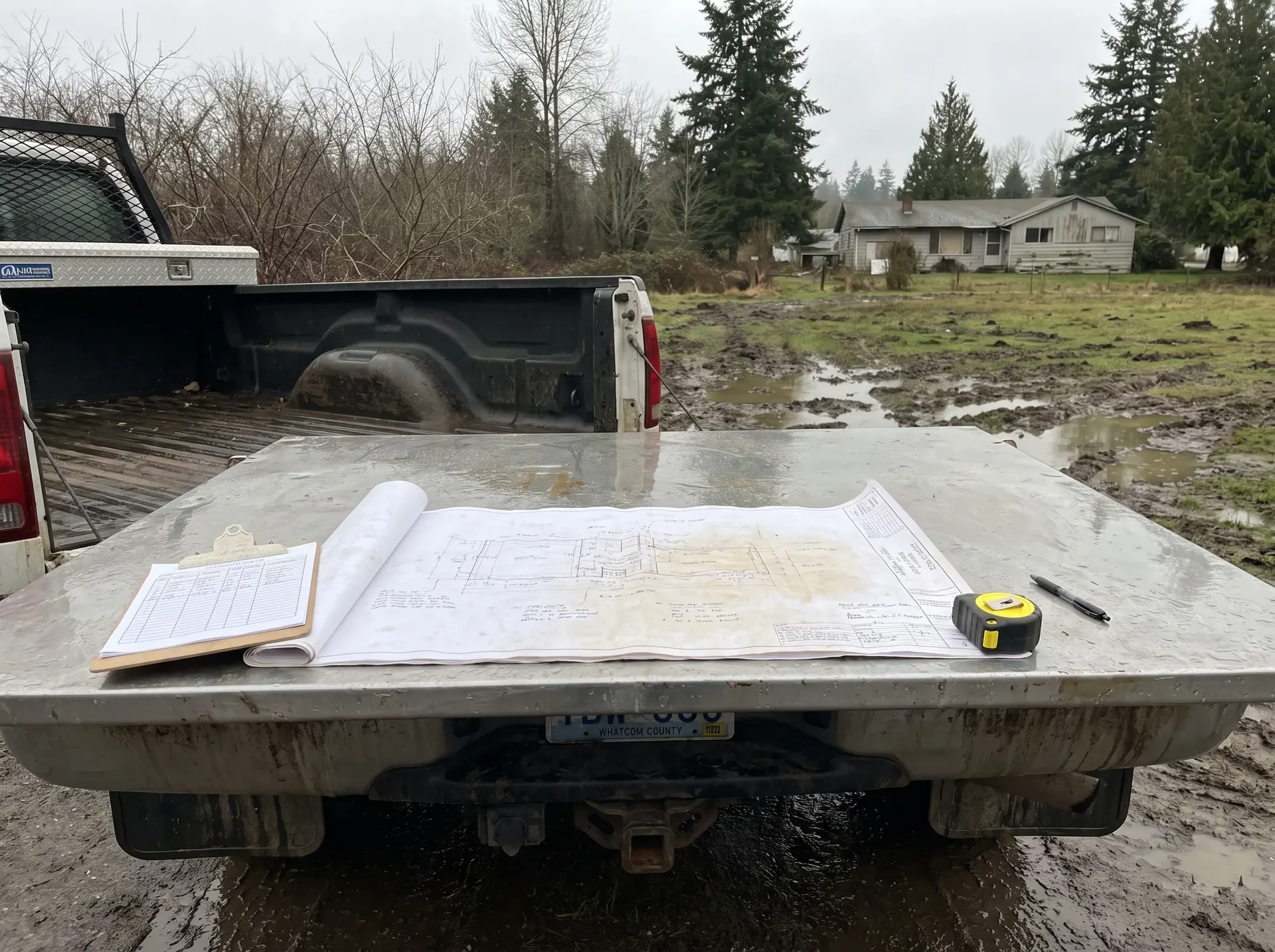 Septic Design and PermittingSite evaluation, system design and the county permit package as one job.
03Local detail
What is different about Lynden septic work
Timing is the diagnosis
If it only misbehaves between November and March, that is a groundwater story. If it misbehaves in August, that is a system story. Nowhere in the county is that distinction more useful than here.
Mound and pressure systems are normal
On ground this wet, conventional gravity fields often were not permitted in the first place. That means pumps, floats and alarms, which need checking as part of routine maintenance rather than only when something goes wrong.
Farm properties have farm loads
A household system serving a farmhouse with seasonal workers, or taking more than domestic flow, is being asked for more than it was designed to give. Worth being honest about at inspection time.
Access in winter is real
Soft ground and long farm drives mean a heavy truck can do damage or get stuck. Tell us about the access, and where a job can reasonably wait for firmer ground, we will say so.
Dispatch
Septic service in Lynden
05Reviews
Placeholder review layout
Placeholder block. No customer reviews exist yet, so nothing here is real content and no rating, score or review schema is published. Replace with genuine reviews before launch or remove this section.
Placeholder quote B. This card exists to show the layout only. Replace this text with a real customer review before launch.
Placeholder quote C. This card exists to show the layout only. Replace this text with a real customer review before launch.
04FAQ
Lynden septic questions
Why does my drain field only flood in winter?
Because the water table has risen to meet it. The soil the field relies on is already saturated with groundwater, so effluent has nowhere to soak away. It is extremely common on flat ground around Lynden and it is not automatically a failed system.
Can a septic drain field be repaired?
Sometimes. If the field is being overwhelmed by groundwater or by an overdue tank rather than clogged by years of solids, removing the cause can bring it back. Our drain field page covers how that gets assessed.
How often does a 1000 gallon septic tank need to be pumped out?
Every two to five years for a typical household, driven mostly by how many people are in the house. On farm properties with variable occupancy the interval can be shorter, and we measure rather than guess.
What are the regulations for septic systems in Washington State?
Washington regulates onsite sewage at state level and Whatcom County runs its own programme on top. Many systems, particularly the pressurised and mound systems common around Lynden, carry ongoing maintenance requirements. Our operation and maintenance guide covers it.
05Coverage
Nearby
We also cover Everson, Nooksack, Sumas and Ferndale, plus Bellingham, Blaine, Custer, Birch Bay, Deming, Sudden Valley and Point Roberts.
06Contact
Book septic service in Lynden
Tell us the address, what is happening, and when it started. That last one matters here.
Call(360) 555-0147Mon to Fri, 7am to 5pm, with emergency service outside those hours.
- Same day emergency response
- The tank gets inspected while the lid is off
- Written reports the county and escrow accept
- No call out fee on a booked job
Request logged
Thanks. We will give you a time and a price.
If it is an emergency, call rather than waiting for a reply.
(360) 555-0147